
The journal · 4 July 2026
A guide to Tulu and Udupi wedding rituals, and how we photograph them
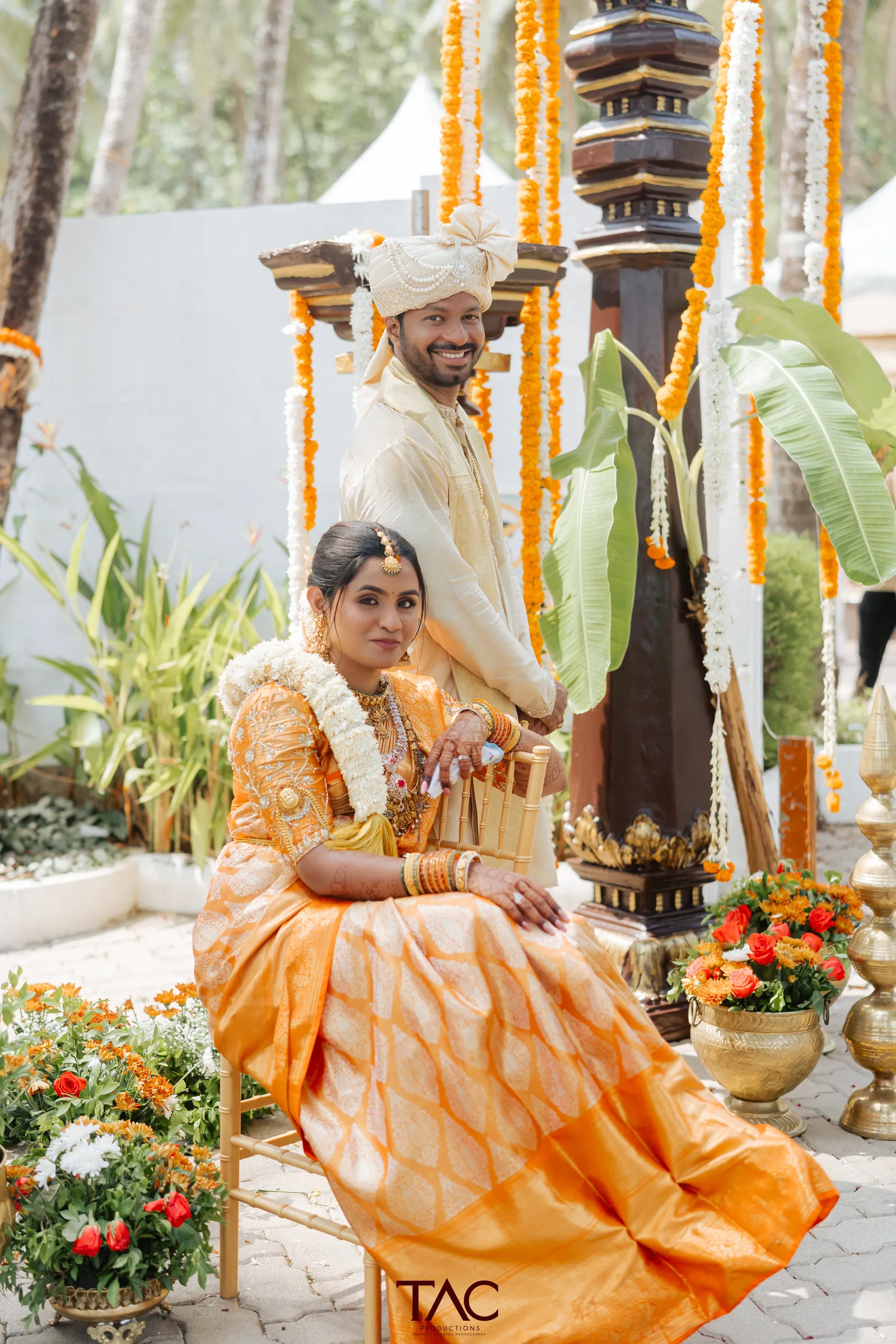
Tulu wedding rituals carry their own rhythm, distinct from the North Karnataka or Bangalore ceremonies more commonly documented online. Shooting across Udupi and Mangalore for years has given us a working understanding of what each ritual means and when it happens — knowledge that changes how we position ourselves in the room.
This is not an anthropology lesson. It’s a practical guide to what happens, and how we approach photographing it.
Naming and language, briefly
Tulu is the language of coastal Karnataka’s Tuluva community, spoken alongside Kannada across Udupi, Mangalore, and Kundapura. Weddings in this belt often blend Tulu customs with broader Kannadiga and regional Hindu traditions, and no two families run the ceremony identically — so we always ask families to walk us through their specific sequence beforehand rather than assuming a template.
Dhare: the core ritual
Dhare is often the ceremonial heart of a traditional Tuluva wedding — water poured over joined hands as a symbol of the union, performed with the bride’s maternal uncle playing a significant role. It is quick, quiet, and easy to miss if a photographer isn’t positioned correctly beforehand. We treat dhare the way we treat a mangalsutra moment: one chance, no second take, camera pre-focused and ready before the priest begins.
Engagement and pre-wedding functions
Many coastal families hold a formal engagement ceremony (nischitartha) days or weeks before the wedding itself, along with smaller family gatherings that don’t always make it onto a formal shot list but often produce the warmest candid images of the entire wedding season. We ask couples to loop us into these smaller functions when possible — the value of documenting them tends to surprise families after the fact.
Haldi and other pre-ceremony rituals
Turmeric ceremonies, sometimes called by different names across Tulu and Konkani households, bring out unguarded, joyful chaos that photographs beautifully in natural light. We shoot these loosely, favouring movement and colour over posed shots — this is where candid coverage does its best work, a theme we cover in more depth in our candid versus traditional guide.
The main ceremony and mandap rituals
Coastal ceremonies often run longer than Bangalore weddings, with a fuller sequence of rituals building toward the main muhurtha. We plan our positioning around the priest’s cues rather than a fixed shot list, since the exact order can shift family to family. Understanding roughly what’s coming — kanyadaan, saptapadi, and the coastal-specific rituals layered around them — lets us anticipate rather than react.
Photographing a coastal wedding respectfully
A few principles guide us here: we never ask a priest to pause or repeat a ritual for a better angle, we keep flash use minimal during moments meant to feel solemn, and we brief every couple on which rituals are closed to non-family photographers before the day begins. This matters as much in a Kundapura beach resort ceremony as it does in a city hall wedding.
Documenting your Tulu wedding
If your wedding blends Tulu tradition with other regional customs, or you simply want a team that won’t need a crash course in your rituals on the day itself, we’d like to talk beforehand. See how we’ve approached coastal ceremonies in our portfolio, or get in touch to walk us through your specific sequence.
— The Artsy Craftsmen