
The journal · 10 July 2026
Tulu / Bunt wedding photography on the Karnataka coast
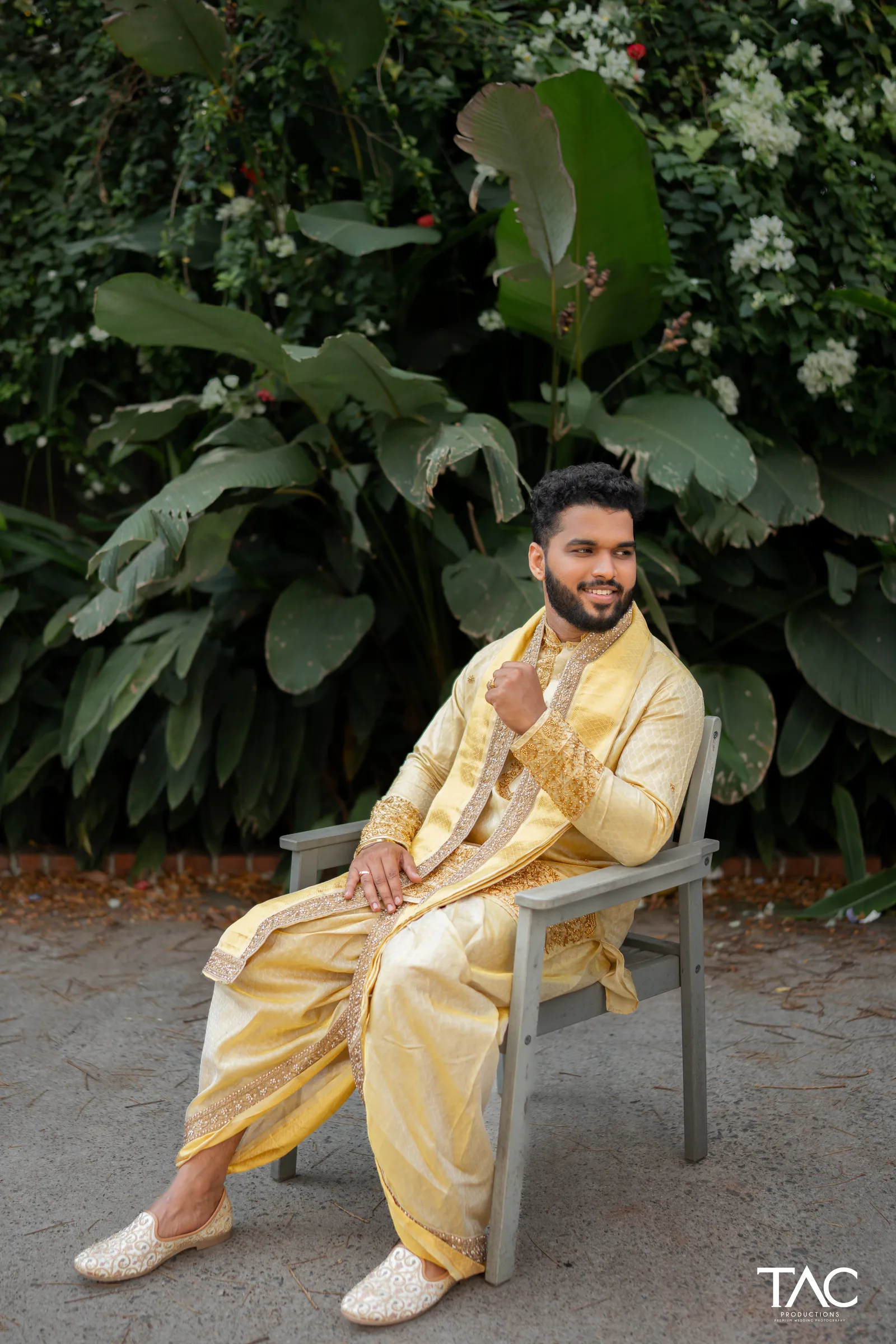
Tulu / Bunt wedding photography on the Karnataka coast asks for something a standard citywide shot list doesn’t give you: a schedule built around the ritual sequence and the sea light at the same time, rather than one or the other. We’ve shot enough of these weddings across Udupi, Mangalore, and Kundapura to plan the two together, and it changes what a couple gets back in their gallery.
This is not a ritual glossary — we’ve written that separately in our guide to Tulu wedding rituals. This is about the planning side: when things happen, where the light is at that hour, and which moments we ask families to protect on the timeline so they don’t get rushed.
What Tulu / Bunt wedding photography on the Karnataka coast requires
Bunt families, part of the wider Tuluva community along this coast, often run a fuller ceremonial sequence than a single-city wedding — pre-wedding functions, a longer main ceremony, and rituals that don’t move to accommodate a photographer’s schedule. Building the photography plan after the ritual timeline is set (not before) is the single biggest difference between a coastal Tulu wedding gallery that feels complete and one with obvious gaps.
We ask every family for their specific sequence weeks ahead, because the order and timing vary from house to house even within the same community. A muhurtha that starts at 7am changes everything about where we position lights and where the sun will be for it.
Dhare and the moments that don’t repeat
Dhare — water poured over the joined hands of the couple, with the bride’s maternal uncle playing a central role in many Tuluva families — is typically the ritual heart of the ceremony. It happens quickly, under the priest’s direction, and there is no second take. We treat it the way we’d treat any single-take moment: camera pre-focused, second angle already covering the family’s reaction, well before the priest begins. Practices around dhare vary between families and sub-communities on this coast, so we always confirm the specific form it will take rather than assuming.
The same logic applies to the smaller moments around it — the uncle’s arrival, the exact second hands are joined, an older relative’s face as it happens. These are the frames couples ask for years later, and they are also the easiest to miss if the photographer is still finding an angle when the ritual starts.
Working with coastal light, not against it
Udupi, Mangalore, and Kundapura share a light pattern that’s different from an inland Bangalore wedding: harder overhead sun by mid-morning, and a long, gentler window in the last hour before sunset. A muhurtha scheduled for late morning under open sky will photograph very differently from one at 7am — flatter, harsher shadows, less forgiving of a bride’s makeup and a groom’s silk against strong contrast. Where the ceremony’s timing is flexible, we ask families to consider whether an early morning or an evening slot will serve their gallery better, though we recognise the muhurtha itself is fixed by the priest and not something we’d ever suggest moving for photography’s sake.
At beachfront and open-lawn venues along this coast, we scout the property a day or two ahead of the wedding to map where the sun will sit at each scheduled ritual, so we’re not discovering the light for the first time with the ceremony already underway.
Pre-wedding functions worth covering properly
Coastal Tulu and Bunt weddings usually run several functions before the main day — like mehendi and Arsina (Haldi). These are frequently treated as secondary by families planning their coverage, and they’re often where the warmest, least self-conscious images of the whole wedding season come from. We ask couples to loop us into at least the larger of these functions rather than saving the full booking for the main ceremony alone.
Family moments to build into the day
Beyond the core rituals, a few moments are worth protecting explicitly on the timeline: the bride’s departure from her family home, the groom’s arrival and welcome, and the quieter minutes before the hall or lawn fills with guests. None of these are formal rituals, but they are consistently the frames families return to, and they are the first things a tight schedule sacrifices.
Photographing respectfully
A few working rules guide us on any coastal ceremony: we never ask a priest to pause or repeat a ritual for a better angle, we keep flash minimal during moments meant to feel solemn, and we confirm with the family in advance which parts of the ceremony are closed to non-family photographers.
Where we shoot on this coast
We shoot Tulu and Bunt weddings across Udupi and Mangalore, including a UVA-group resort near Kundapura, where Samyuktha and Darshan’s coastal wedding was held indoors through a morning-to-noon ceremony, the window light in the mandap hall doing the work an open lawn does elsewhere. Every coastal venue behaves a little differently, which is part of why we prefer to plan the schedule with the venue and the ritual order in hand together, not separately.
Planning your coastal Tulu or Bunt wedding
If you’re planning a Tulu or Bunt wedding anywhere along this coast, we’re glad to talk through your family’s ritual order and how we’d build the day’s photography timeline around it. Browse recent coastal weddings in our portfolio, or reach out to start planning your date.
— The Artsy Craftsmen